
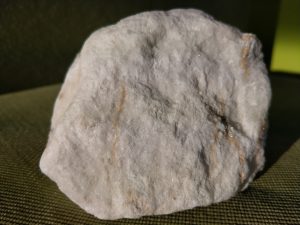
 Gypsum is a mineral species belonging to the group of water-containing sulfate minerals. Colorless or white, but sometimes foreign (iron oxide, iron oxide, clay, etc.) can be painted red, yellow, brown, gray, black. Formula: CaSO4 · 2H2O (calcium sulfate di-hydrate). It is very difficult to dissolve in water but still slightly soluble. Its light is glass-luster, pearl-like on its splitting surface. Its crystals are mostly plaque, prismatic, needle-shaped. Often it forms twins, mostly twin-shaped twins. Mineral gypsum is a natural material, non-toxic, and additionally has a very positive physiological effect, it can absorb moisture from the air through its diffusion diffusion and is capable of controlling the optimal humidity of the air. There is gypsum in all spring water, running water and sea water. In addition to crystals, gypsum can be found in large masses, compact, granular, fibrous, earthy, and have different names and characteristics. The snow-white, granular or stuffy, slightly translucent gypsum is the alabaster that carries all kinds of ornaments like marble. Transparent, leaf-woven gypsum is Mary’s glass; the fine silk, fibrous texture is fibrous gypsum or satin. The latter is also processed into beads; if it is very fine, it will be spherical, with a cat’s eye glittering.